About 255 minutes
The Walls of Constantinople — Story, Setting & Ideas
Places Peoples
58,495 recorded words. 75 minutes difference from this book's estimate.
View Gutenberg source #46353
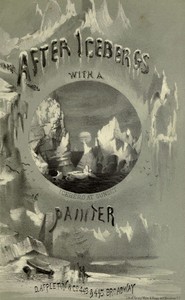
The source record for After Icebergs with a Painter A Summer Voyage to Labrador and Around Newfoundland. — Reading Companion measures this digital text at 75,697 words, 5 hr 30 min estimated reading time, and 9 detected text sections.
The text analysis averages about 20.5 words per sentence, while the detected sections provide another way to judge how the source is divided.
Project Gutenberg metadata also associates the work with “Labrador (N.L.) -- Description and travel,” connecting these edition facts with the source record’s subject description.
Explore this collection
These alternatives are selected using recorded categories and estimated reading time.
About 255 minutes
Places Peoples
58,495 recorded words. 75 minutes difference from this book's estimate.
View Gutenberg source #46353About 417 minutes
Places Peoples
95,820 recorded words. 87 minutes difference from this book's estimate.
View Gutenberg source #45204About 220 minutes
Places Peoples
50,473 recorded words. 110 minutes difference from this book's estimate.
View Gutenberg source #56462Search stored excerpts and compare books → Choose by your preferences →
Choices use stored catalog measurements. Estimates vary with reading speed. A shared category is a catalog label, not a claim that two books have the same argument or literary quality.
Search reads excerpt text stored with this catalog and links to its associated Gutenberg record. The connection is stored in the site database; this tool does not recheck that every excerpt is word-for-word identical to that external record. Excerpt search does not cover every chapter and does not verify historical publication dates.
Catalog snapshot checked: 2026-09-25. Coverage: 97 public books, 97 available source excerpts.
Calculated from edition completeness, EPUB availability, text structure and catalogue metadata. Not a user rating.
Total of 100 points, scaled to a 2.5-5.0 range. Editions with an empty description or a missing EPUB file are not scored.
Public-domain source text
The source text is kept in the dedicated reader, separate from this catalogue record and its commentary.
The title-page, Noble writes, 'alone would serve for a preface' to this record of a summer voyage in 1859. The purpose was clear: to accompany a distinguished landscape painter along the northeastern coast of British America to study and sketch icebergs. Initially, the shores near St. Johns, Newfoundland, seemed promising, but icebergs proved too few and too distant for the requisite variety. A small vessel was hired to take the party to Labrador, where Battle Harbor, near Cape St. Louis, offered abundant ice and sketching facilities.
Noble's preface emphasizes that the book is made from 'notes pencilled rapidly,' aiming to picture with freshness what was seen and felt. The journey's return route through the Gulf of St. Lawrence, coasting western Newfoundland and Cape Breton, and concluding with a ride across Nova Scotia to the Bay of Fundy, provided further diversity.
The narrative is driven by a specific artistic mission: to capture icebergs in paint. Noble notes that the painter, referred to as 'C——', found great difficulty in painting from the boat due to motion, yet the boat was the best vantage point, as men could 'take a position, and keep it by the help of oars' despite waves and currents. The excerpts reveal a focus on the challenges of representing icebergs—their colors, forms, and the fleeting light. Noble describes how the berg's surface melted into 'circular depressions about the depth and size of a large watch-crystal,' with angles falling into parallel and diagonal lines. The painter's struggle to render such details is a recurring thread.
Noble's descriptions of icebergs are precise and sensory. He observes that blue veins in the ice are 'much softer than the surrounding ice, melting faster,' forming channels where 'little torrents glitter as they run.' These veins, he infers, are cracks filled with water and frozen when the berg was a glacier, marking its original perpendicular. The most striking passages concern color: the berg at sunset is 'immersed in almost supernatural splendors,' with a white alpine peak rising from 'a field of delicate purple.' Colors flit 'from tint to tint' with a rapidity 'impossible to describe or paint,' passing through peach-blow, pink, and rose-red before softening into dove-colors. Noble likens the effect to the 'merry dancers' of the northern lights.
Beyond visual beauty, Noble emphasizes the tangible properties of iceberg ice. He recounts securing a piece of ice shaped like a moose antler: 'It was a match for three of us,' slipping back into the waves repeatedly. He declares it 'the hardest and the heaviest' and 'the most slippery of all ices,' feeling colder than summer ice. The surface of this horn melted into regular circular depressions, 'all cutting into each other with such regularity that their angles fall into lines parallel and diagonal.' Such details ground the sublime in physical experience, reminding the reader that icebergs are not just spectacles but massive, recalcitrant objects.
The book's structure follows the voyage's stages: from Halifax to Sydney, Cape Breton, then to St. Johns, Newfoundland, and onward to Labrador. Chapters cover specific locations and encounters, such as 'The Ride to Torbay,' 'The Whales,' and 'The Fishing-barge.' Noble includes local figures like 'William Waterman, the fisherman' and describes fish-houses, flakes, and the processing of cod-liver oil. These sections ground the iceberg-focused narrative in the human and economic realities of the Newfoundland coast. The return journey through the Gulf of St. Lawrence and across Nova Scotia provides a contrasting conclusion, broadening the geographical scope beyond the ice fields.
Noble's account is best approached as a travel diary shaped by a painter's eye. The reader should expect vivid, moment-by-moment observations of icebergs—their colors, textures, and behavior—rather than a systematic scientific treatise. The narrative moves between the sublime and the mundane, from the painter's struggles with his medium to the practicalities of hiring boats and navigating coastal waters. Pay attention to the recurring tension between the desire to capture nature and its resistance to representation.
I keep thinking about that old voyage—how Noble watched the icebergs shift color from his bobbing boat, knowing he could never capture them fully. It felt like holding something vast and temporary. Reading The Padre Island Story — A Closer Reading brought that same quiet ache, a shoreline slipping away as you try to remember it.
Your answers remain private and are stored only in this browser.