About 208 minutes
Trails Through Western Woods — Reading Companion
Places Peoples
47,639 recorded words. 28 minutes difference from this book's estimate.
View Gutenberg source #42527
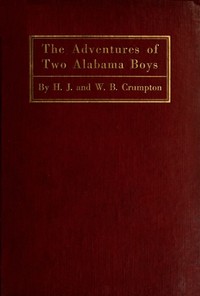
This digital edition of The Adventures of Two Alabama Boys — Themes and Context is described by source-level measurements including 41,374 words, 3 hr estimated reading time, and 5 detected text sections.
The text analysis averages about 18.9 words per sentence, while the detected sections provide another way to judge how the source is divided.
Project Gutenberg metadata also associates the work with “California -- Description and travel,” connecting these edition facts with the source record’s subject description.
Explore this collection
These alternatives are selected using recorded categories and estimated reading time.
About 208 minutes
Places Peoples
47,639 recorded words. 28 minutes difference from this book's estimate.
View Gutenberg source #42527About 220 minutes
Places Peoples
50,473 recorded words. 40 minutes difference from this book's estimate.
View Gutenberg source #56462About 255 minutes
Places Peoples
58,495 recorded words. 75 minutes difference from this book's estimate.
View Gutenberg source #46353Search stored excerpts and compare books → Choose by your preferences →
Choices use stored catalog measurements. Estimates vary with reading speed. A shared category is a catalog label, not a claim that two books have the same argument or literary quality.
Search reads excerpt text stored with this catalog and links to its associated Gutenberg record. The connection is stored in the site database; this tool does not recheck that every excerpt is word-for-word identical to that external record. Excerpt search does not cover every chapter and does not verify historical publication dates.
Catalog snapshot checked: 2026-09-25. Coverage: 97 public books, 97 available source excerpts.
Calculated from edition completeness, EPUB availability, text structure and catalogue metadata. Not a user rating.
Total of 100 points, scaled to a 2.5-5.0 range. Editions with an empty description or a missing EPUB file are not scored.
Public-domain source text
The source text is kept in the dedicated reader, separate from this catalogue record and its commentary.
The book is divided into three distinct sections, each with its own narrator and focus. Part One recounts Dr. H. J. Crumpton's overland journey to the California gold fields in 1849. Part Two shifts to his brother W. B. Crumpton's experiences during the Civil War, including a daring escape through enemy lines. Part Three returns both brothers to California forty years later. This structure allows the reader to compare two very different American adventures—one driven by gold, the other by war—while observing how the same family's storytelling voice adapts to each setting.
The book's tripartite structure is unusual for a memoir. Part One is told by H. J. Crumpton, a doctor, in a straightforward, detail-oriented style. He describes distances, terrain, and the physical toll of walking: his feet are "blistered and swollen," and he wonders if his knees still have joints. Part Two, by W. B. Crumpton, is more dramatic and conversational, with direct dialogue and a sense of immediate danger. The third part, written after a forty-year gap, offers a reflective coda. The foreword notes that the first section was written at W. B.'s "earnest solicitation," suggesting the brothers collaborated consciously to preserve their separate experiences.
Water appears repeatedly as an obstacle and a protector. In Part One, a sudden rainstorm creates a flood "big enough to float the navy of the United States," which may have thwarted a boy's plan to report the narrator to Yankees. In Part Two, the narrator must wait for Caster River to go down before crossing. Fire also recurs: the narrator sees "remains of burned homes" in war-torn Tennessee, contrasting with the welcoming fires in a home where "fires burning brightly in the cabins" signal safety. These images tie the two sections together, showing how both brothers faced elemental forces beyond their control.
The narrative moves rapidly from one encounter to the next, often without transition. In Part Two, the narrator walks from a hostile farmer who curses him to a welcoming home with "negro quarters stretching out" and cattle lowing. Each stop is a self-contained scene with its own characters and tension. The road itself becomes a stage where the narrator's identity—as a "little old rebel" or a traveler—is constantly questioned. The pacing mirrors the uncertainty of travel: one moment he is threatened, the next he is offered shelter. This episodic structure keeps the reader alert to sudden shifts in fortune.
Hospitality in the book is rarely straightforward. In Part Two, the narrator asks a woman for rest, and her hesitant "y-e-s, I reckin so" makes him leave immediately. Earlier, a farmer threatens to report him to the Home Guards. Yet other hosts offer food and shelter without hesitation. The narrator must constantly gauge trustworthiness, reading body language and tone. The phrase "I saw at once that I was not welcome" shows his reliance on social cues. This theme of suspicion—whether from strangers or from the narrator himself—runs through both parts, reflecting the precariousness of travel in a divided country.
Readers will find that the book rewards attention to its structure and recurring details. The two brothers' voices differ markedly, and comparing their accounts reveals how the same family experienced two transformative American events. The third part, though brief, offers a perspective on how memory reshapes adventure over decades. This is not a polished literary memoir but a raw, episodic record—valuable for its immediacy and its unvarnished portrayal of hardship, luck, and human encounter.
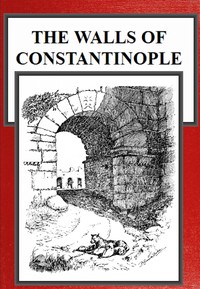
Years among these shelves teach you how certain books breathe together. The Adventures of Two Alabama Boys carries that weary, wary hope of travelers watching unfamiliar walls rise before them. I find the same hush in The Walls of Constantinople — Story, Setting & Ideas, that long glance at stone which has witnessed every kind of stranger, every kind of welcome. Both know suspicion’s weight and the strange kindness found beneath it.
Answer a few questions and save a private reflection on this device.