About 180 minutes
The Adventures of Two Alabama Boys — Themes and Context
Places Peoples
41,374 recorded words. 121 minutes difference from this book's estimate.
View Gutenberg source #48142
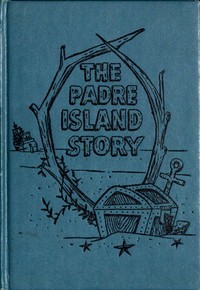
The catalog record for The Padre Island Story — A Closer Reading provides practical reading context through 13,547 words, 59 min estimated reading time, and 2 detected text sections.
The text analysis averages about 20.5 words per sentence, while the detected sections provide another way to judge how the source is divided.
Project Gutenberg metadata also associates the work with “Padre Island (Tex.),” connecting these edition facts with the source record’s subject description.
Explore this collection
These alternatives are selected using recorded categories and estimated reading time.
About 180 minutes
Places Peoples
41,374 recorded words. 121 minutes difference from this book's estimate.
View Gutenberg source #48142About 208 minutes
Places Peoples
47,639 recorded words. 149 minutes difference from this book's estimate.
View Gutenberg source #42527About 220 minutes
Places Peoples
50,473 recorded words. 161 minutes difference from this book's estimate.
View Gutenberg source #56462Search stored excerpts and compare books → Choose by your preferences →
Choices use stored catalog measurements. Estimates vary with reading speed. A shared category is a catalog label, not a claim that two books have the same argument or literary quality.
Search reads excerpt text stored with this catalog and links to its associated Gutenberg record. The connection is stored in the site database; this tool does not recheck that every excerpt is word-for-word identical to that external record. Excerpt search does not cover every chapter and does not verify historical publication dates.
Catalog snapshot checked: 2026-09-25. Coverage: 97 public books, 97 available source excerpts.
Calculated from edition completeness, EPUB availability, text structure and catalogue metadata. Not a user rating.
Total of 100 points, scaled to a 2.5-5.0 range. Editions with an empty description or a missing EPUB file are not scored.
Public-domain source text
The source text is kept in the dedicated reader, separate from this catalogue record and its commentary.
From its opening pages, The Padre Island Story establishes a dual vision of the island as both a primitive frontier and a modern resort. The authors introduce Padre as a place where “savages, cavaliers, pirates, soldiers and pioneers” once roamed, yet immediately counterpoint this with images of “gleaming white sand dunes,” tropical birds, and “a resort oasis of modern architecture.” This juxtaposition of past and present recurs throughout the work, shaping its structure as a series of movements between historical lore and contemporary development.
The book’s organization mimics a physical journey along the Texas coast. After an introduction that sketches the island’s history and geography, the chapters proceed geographically: from the southern tip at Padre Beach and Port Isabel, through the Rio Grande Valley towns, and northward toward Corpus Christi. The text often uses directional cues such as “Turning left from Brownsville” or “the first stop down this main street,” guiding the reader as if on a road trip. This movement is not merely descriptive but structural, with each stop—La Feria, Mercedes, Weslaco, Donna, Alamo, San Juan, Pharr, McAllen, Mission—receiving a brief character sketch and a notable feature. The effect is a catalog of places linked by the highway, reinforcing the idea of the region as an accessible, interconnected landscape.
Two images recur with notable frequency: treasure and transformation. The introduction promises that “once in awhile the shifting sands reveal to the lucky hunter an old money cache or relic,” and the chapter titled “Glittering Graveyard” suggests a landscape where valuable objects lie buried. This motif of hidden wealth—whether pirate gold, seashells, or citrus fruit—ties the natural environment to human desire. Simultaneously, the authors emphasize transformation: the island itself is described as rising “out of the sand dunes,” while towns like Port Isabel were once “designed to become a modern Venice,” with dredged channels still visible. The text presents Padre as a place in constant flux, where the past is never fully erased but instead resurfaces through sand, architecture, and memory.
The book repeatedly highlights the proximity of Mexico and the Rio Grande Valley as a source of contrast and enrichment. The introduction notes “the gay flavor of Mexico” and the ease of border crossings, where “dollars meet their usual welcome.” In the tour of Valley towns, this borderland identity is woven into descriptions: McAllen is “only eight miles from the border” and called “one of the gateways to Old Mexico”; Mission is named after a chapel built in 1849. The text also contrasts the “tropical splendor” of the Valley’s palm-lined highway with the “virgin beauty” of the island’s center, which the authors note is being considered for a National Seashore Park. These juxtapositions—between the cultivated and the wild, the American and the Mexican, the historical and the modern—create a layered sense of place that goes beyond simple tourism.
The book’s structure, with its two picture sections and chapters that alternate between natural history and human activity, reflects its dual purpose as both a travel guide and a regional portrait. The table of contents lists chapters such as “Airy Wanderers” (likely about birds) and “Bountiful Borderland” alongside “Matadors and Promenaders” and “Playfolk and Sportsmen,” suggesting a deliberate alternation between natural observation and cultural description. This rhythm mirrors the authors’ introductory claim that the island offers both “primitive, swashbuckling history” and modern resort amenities. The inclusion of a “Fun Calendar” and a bibliography further grounds the work in practical utility, while the dedication to parents and the acknowledgments to local experts underscore the personal and collaborative nature of the project. The result is a text that moves fluidly between genres, never settling into a single mode.
Readers approaching The Padre Island Story will find a work that is less a continuous narrative than a series of vignettes, each anchored to a specific location or theme. The authors’ method of moving from place to place, and from past to present, invites the reader to experience the island as a composite of many layers. Pay attention to the transitions between chapters: they often signal a shift in tone or subject, revealing the authors’ careful orchestration of contrasts. The book rewards those who read it as a guided tour, following the route from south to north and noting how each stop contributes to the larger portrait of a changing coastline.
I keep returning to that old 1962 Padre Island guide, where every turn of the page feels like shifting sand—treasure just under the surface, then a parking lot. It reminded me, strangely, of The Walls of Constantinople — Story, Setting & Ideas, how both books make layers feel almost tangible, like you could brush away the present and touch something older. Not a lesson, just that quiet vertigo of standing where many have stood.
Build a private reading journal entry for this title.