About 199 minutes
John L. Stoddard's Lectures, Vol. 01 (of 10) Norway, Switzerland, Athens, Venice — A Closer Reading
Geography
45,615 recorded words. 2 minutes difference from this book's estimate.
View Gutenberg source #58580
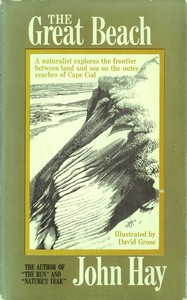
This digital edition of The great beach — Background and Themes is described by source-level measurements including 46,033 words, 3 hr 21 min estimated reading time, and 19 detected text sections.
The text analysis averages about 26.7 words per sentence, while the detected sections provide another way to judge how the source is divided.
Project Gutenberg metadata also associates the work with “Cape Cod (Mass.) -- Description and travel,” connecting these edition facts with the source record’s subject description.
Explore this collection
These alternatives are selected using recorded categories and estimated reading time.
About 199 minutes
Geography
45,615 recorded words. 2 minutes difference from this book's estimate.
View Gutenberg source #58580About 206 minutes
Geography
47,290 recorded words. 5 minutes difference from this book's estimate.
View Gutenberg source #66205About 214 minutes
Geography
49,192 recorded words. 13 minutes difference from this book's estimate.
View Gutenberg source #67784Search stored excerpts and compare books → Choose by your preferences →
Choices use stored catalog measurements. Estimates vary with reading speed. A shared category is a catalog label, not a claim that two books have the same argument or literary quality.
Search reads excerpt text stored with this catalog and links to its associated Gutenberg record. The connection is stored in the site database; this tool does not recheck that every excerpt is word-for-word identical to that external record. Excerpt search does not cover every chapter and does not verify historical publication dates.
Catalog snapshot checked: 2026-09-25. Coverage: 97 public books, 97 available source excerpts.
Calculated from edition completeness, EPUB availability, text structure and catalogue metadata. Not a user rating.
Total of 100 points, scaled to a 2.5-5.0 range. Editions with an empty description or a missing EPUB file are not scored.
Public-domain source text
The source text is kept in the dedicated reader, separate from this catalogue record and its commentary.
John Hay opens The Great Beach with a frank admission of temerity: writing another book about Cape Cod after Thoreau, Beston, and Kittredge. Yet his prose quickly establishes a distinct voice—one that moves between scientific description and meditative wonder. In the chapter on tides, Hay describes how waves “expend the energy of their motion when they increase in height,” a phrase that could apply equally to his own sentences, which build and release tension across paragraphs. He confesses to being “neither a trained scientist nor an accomplished sailor,” yet his observations of tidal systems around the Cape are precise enough to trace the “interference” patterns between Buzzards Bay and the Gulf of Maine.
Hay’s word choices often blur the line between the physical and the perceptual. He speaks of “the repositioning of the sun and the changing of its shadows” as if the sun itself were being moved, not the earth. When describing the spider’s hole “neatly defined at the top by a little rim of grasses,” the adjective “neatly” suggests a domestic order imposed on wild sand. Elsewhere, he writes of “the knowledge of cold massive depths in one place, warm shallows in another, come into feeling as both unified and infinitely complex.” The verb “come into feeling” is unusual—it treats knowledge as something that arrives through the senses, not the intellect. These choices reveal a writer who distrusts abstract authority and instead trusts the body’s encounter with the landscape.
Hay’s syntax often mimics the tidal movements he describes. Long, accumulating clauses build like incoming waves, then break into shorter, declarative phrases. In the tidal passage, he strings together a series of observations—“the over-all wind; the light that shines on the beach grass, moves over the pebbled ground, and sparkles the sea, or turns it into a blazing white cauldron”—before concluding with a quiet, almost parenthetical admission: “I may fail at mathematics but be an unconscious mathematician.” This pattern of expansion followed by contraction appears repeatedly. It gives the prose a breathing quality, as if the writer is himself subject to the same forces he records. The effect is not decorative; it is structural, linking form to content.
Hay explicitly places himself in a lineage of Cape Cod writers, naming “the three Henrys—Thoreau, Beston, and Kittredge.” But his dialogue with them is not deferential. Where Thoreau cataloged, Hay feels; where Beston narrated, Hay speculates. In the foreword, he writes that “each to his own eye,” a phrase that both acknowledges tradition and claims independence. Later, when describing the Pilgrims’ arrival, he quotes Bradford’s history directly: “they now had no friends to welcome them.” Yet Hay’s own voice quickly takes over, shifting from historical record to sensory immersion. He does not attempt to outdo his predecessors in scope or drama; instead, he narrows his focus to the immediate, the tactile, the overlooked. The result is a book that feels less like a competition and more like a conversation across centuries.
Throughout the excerpts, Hay turns his attention not only outward to the beach but inward to the act of perception itself. He writes that “on some level below that we have air and tides in us that know the energies of earth from past acquaintance,” suggesting that human bodies carry an ancient, preconscious memory of the natural world. This idea recurs in his worry that “our natural senses are becoming atrophied.” The beach becomes a place where that atrophy might be reversed. When he sits on the cliff top and notices “rabbit dung” and a spider’s hole, the details are not merely descriptive; they are evidence of a mind training itself to see. The book, then, is as much about the observer as the observed—a record of learning to attend.
Hay’s chapters are organized around processes of change: tides, dunes, migration, erosion. The title of chapter XI, “Impermanence Takes Its Stand,” could serve as an epigraph for the whole work. In the tidal section, he notes that the Cape “lies between two tidal systems, created and separated by its geography,” a sentence that could describe the book’s own position between science and poetry. Hay does not resolve this tension; he inhabits it. The beach, for him, is a place where “the energy of the head or of the heart” remains unsettled. This refusal to choose a single mode of understanding gives the prose its particular texture—at once precise and provisional, learned and uncertain.
Readers coming to The Great Beach should expect neither a field guide nor a memoir in the usual sense. Hay’s method is associative: a fact about tidal ranges leads to a reflection on mathematical ignorance, which leads to a spider’s hole. The connections are not always explicit, and the book rewards slow, attentive reading. Pay attention to the verbs—they often carry the weight of Hay’s argument. And note where he shifts from third-person observation to first-person confession; those are the moments when the beach becomes a mirror.
Hay’s Cape Cod breathes with the tide’s unhurried patience, each wave a sentence. I find that same steady, watchful rhythm in the journey from Cairo to Kisumu — Background and Themes, where the land itself seems to dictate the pace, a quiet conversation between two landscapes that never raise their voices.
Your answers remain private and are stored only in this browser.