About 114 minutes
Narrative of a Recent Imprisonment in China after the Wreck of the Kite — Story, Setting & Ideas
Geography
26,149 recorded words. 5 minutes difference from this book's estimate.
View Gutenberg source #60335
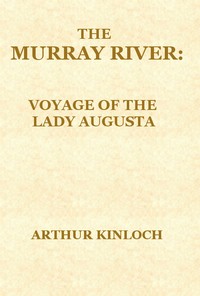
Before opening The Murray River Being a Journal of the Voyage of the "Lady Augusta" Steamer from the Goolwa, in South Australia, to Gannewarra, above Swan Hill, Victoria, a Distance from — A Reader’s Guide, the edition data offers a quick orientation: 24,910 words, 1 hr 49 min estimated reading time, and 3 detected text sections.
The text analysis averages about 28.9 words per sentence, while the detected sections provide another way to judge how the source is divided.
Project Gutenberg metadata also associates the work with “South Australia -- Description and travel,” connecting these edition facts with the source record’s subject description.
Explore this collection
These alternatives are selected using recorded categories and estimated reading time.
About 114 minutes
Geography
26,149 recorded words. 5 minutes difference from this book's estimate.
View Gutenberg source #60335About 116 minutes
Geography
26,630 recorded words. 7 minutes difference from this book's estimate.
View Gutenberg source #57437About 122 minutes
Geography
28,000 recorded words. 13 minutes difference from this book's estimate.
View Gutenberg source #60006Search stored excerpts and compare books → Choose by your preferences →
Choices use stored catalog measurements. Estimates vary with reading speed. A shared category is a catalog label, not a claim that two books have the same argument or literary quality.
Search reads excerpt text stored with this catalog and links to its associated Gutenberg record. The connection is stored in the site database; this tool does not recheck that every excerpt is word-for-word identical to that external record. Excerpt search does not cover every chapter and does not verify historical publication dates.
Catalog snapshot checked: 2026-09-25. Coverage: 97 public books, 97 available source excerpts.
Calculated from edition completeness, EPUB availability, text structure and catalogue metadata. Not a user rating.
Total of 100 points, scaled to a 2.5-5.0 range. Editions with an empty description or a missing EPUB file are not scored.
Public-domain source text
The source text is kept in the dedicated reader, separate from this catalogue record and its commentary.
Arthur Kinloch's journal of the voyage of the steamer Lady Augusta from Goolwa to Gannewarra is structured as a daily record, with each entry anchored by a date and often a location. The narrative moves between precise navigational details—such as distances traveled and wood taken aboard—and broader scenes of river life, including the loading of wool bales and the exchange of addresses between settlers and the Lieutenant-Governor. Kinloch's preface immediately establishes a key tension: the river was 'considerably flooded' during the voyage, and he cautions English readers not to judge Australian rivers by European standards, citing the Rhone, Nile, and Euphrates as examples of seasonal variation. This framing shapes the entire journal, as the reader watches the steamer negotiate a landscape that is both promising and unpredictable.
The journal's backbone is its chronological entries, each beginning with a date and often a time or location. For instance, the entry for Friday, October 7th, notes reaching the Darling at eleven p.m. despite cloudiness, then shifts to the loading of wood and wool. Kinloch records specific cargo details: nine bales of wool, sheep skins, tallow, bringing the total to 441 bales averaging 300 lbs each, valued at £9,000–£10,000. These concrete figures ground the narrative in the practicalities of river trade. The steamer's progress is measured not only in miles but in the rhythm of stops for fuel and cargo, creating a sense of steady movement punctuated by brief, purposeful halts.
Two images recur throughout the excerpts: water and wood. The river's fluctuating level is a constant concern, with Kinloch noting that the flood had not yet reached its highest elevation (around December). Wood appears as both fuel and a structural element: the steamer takes in 'some tons of wood' at the Darling, and earlier in the text, a description of water slowly dripping from wood to preserve it for travellers evokes the arid landscape's reliance on stored moisture. These details tie the voyage to the physical environment, where the river's abundance and scarcity are always in tension.
Kinloch's journal moves fluidly between different registers: the mundane loading of cargo, the formal exchange of addresses between settlers and Sir Henry Young, and the arrival of despatches and newspapers. The entry for October 7th exemplifies this: after noting the steamer's wood and wool intake, Kinloch records that 'despatches, papers, &c., came on board' and that the South Australian journals were preoccupied with the trip, while English papers covered the 'mimic war at Chobham.' This juxtaposition of local and imperial news, of commercial and ceremonial activities, gives the journal a layered texture, as if the steamer were a moving node connecting disparate worlds.
One of the most striking features of the journal is the inclusion of a full address from Murray settlers to Sir Henry Young, along with his rejoinder. This document, reproduced verbatim, shifts the narrative from Kinloch's first-person observations to a collective voice praising the 'liberal and enlightened policy' of South Australia and recalling 'the difficulties and tedious delays' of reaching a market before steam navigation. By embedding this formal text, Kinloch allows the settlers to speak directly, turning the journal into a record not just of a voyage but of a historical moment when the river's potential was being publicly articulated and celebrated.
Readers approaching Kinloch's journal should attend to its hybrid nature: part travel log, part commercial ledger, part political document. The daily entries reward close attention to small details—the weight of a wool bale, the time of arrival, the source of news—as these accumulate into a portrait of a river in transition. The preface's warning about seasonal floods is a useful lens: the voyage occurred during a flood, so the river described is not the Murray in its ordinary state but a swollen, more navigable version. This awareness enriches every observation of depth, current, and landing.
Arthur Kinloch wrote his Murray River journal during a flood, when the country refused to behave as his charts promised. That same feeling—land that keeps its own timing, no matter what maps claim—came back to me reading The great beach — Background and Themes. We follow the water, but it decides where we belong. The great beach — Background and Themes holds that quiet uncertainty, too, like a tide we can’t quite predict.
Save your reaction, strongest insight, and memorable passage.