About 267 minutes
Advance Australasia: A Day-to-Day Record of a Recent Visit to Australasia. Second Edition. — Key Ideas to Explore
Geography
61,406 recorded words. 0 minutes difference from this book's estimate.
View Gutenberg source #64060
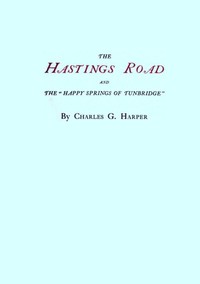
Before opening The Hastings Road and the "Happy Springs of Tunbridge" — Themes and Context, the edition data offers a quick orientation: 61,374 words, 4 hr 27 min estimated reading time, and 14 detected text sections.
The text analysis averages about 28.2 words per sentence, while the detected sections provide another way to judge how the source is divided.
Project Gutenberg metadata also associates the work with “England -- Description and travel,” connecting these edition facts with the source record’s subject description.
Explore this collection
These alternatives are selected using recorded categories and estimated reading time.
About 267 minutes
Geography
61,406 recorded words. 0 minutes difference from this book's estimate.
View Gutenberg source #64060About 272 minutes
Geography
62,510 recorded words. 5 minutes difference from this book's estimate.
View Gutenberg source #58230About 261 minutes
Geography
60,019 recorded words. 6 minutes difference from this book's estimate.
View Gutenberg source #70026Search stored excerpts and compare books → Choose by your preferences →
Choices use stored catalog measurements. Estimates vary with reading speed. A shared category is a catalog label, not a claim that two books have the same argument or literary quality.
Search reads excerpt text stored with this catalog and links to its associated Gutenberg record. The connection is stored in the site database; this tool does not recheck that every excerpt is word-for-word identical to that external record. Excerpt search does not cover every chapter and does not verify historical publication dates.
Catalog snapshot checked: 2026-09-25. Coverage: 97 public books, 97 available source excerpts.
Calculated from edition completeness, EPUB availability, text structure and catalogue metadata. Not a user rating.
Total of 100 points, scaled to a 2.5-5.0 range. Editions with an empty description or a missing EPUB file are not scored.
Public-domain source text
The source text is kept in the dedicated reader, separate from this catalogue record and its commentary.
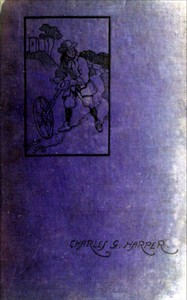
Harper opens his account of the Hastings Road not with a romantic vista but with gradients: the road is 'hilly,' he warns, and the cyclist will find 'an amazing amount of rising gradient in proportion to downhill.' The motorist, shifting down through the gears, crawls uphill 'like a bluebottle up a window-pane.' This practical, slightly sardonic voice sets the tone for a book that is as much about the physical experience of travel as about the places themselves. Harper, who illustrated his own work, combines the precision of a surveyor with the eye of a social observer.
Harper’s preface immediately establishes the road as a test. He measures descents 'by mere measurement in rods, poles, and perches' and notes that the corresponding rise is 'a long-drawn experience.' The motorist’s struggle—'charging along the levels at an illegal pace, raising veritable siroccos of dust'—is rendered with comic exaggeration. Yet the author’s own allegiance is unclear: he writes for cyclists, motorists, and pedestrians alike, cataloguing gradients with the authority of someone who has laboured up them. The Sevenoaks stretch, with its 'ramparted downs,' is singled out for its deceptive profile: 'other lengths as near as may be flat, leading you to believe you are there, when in sheer cold fact you are not.'
A long section on hop-picking reveals Harper’s fascination with the seasonal labour that floods Kent each autumn. He notes that 50,000 pickers work 35,000 to 40,000 acres, and that railways run 'hopper specials' at very low rates. The pickers’ huts are 'little brick dens, not altogether unlike some of the wild animals’ lairs at the Zoological Gardens,' whitewashed 'in the manner of a cattle-pen.' Harper describes the daily routine: the ganger measures stripped hops at 'eight bushels a shilling,' and pickers earn 'a shilling to two shillings the day.' He does not romanticise the conditions—'there is not even any furniture, nor a bed'—but acknowledges that for many Londoners, this is 'the only holiday they get throughout the year.'
The subtitle promises the 'Happy Springs of Tunbridge,' and Harper devotes attention to the spa town’s social history. The phrase itself is a quotation from earlier promotional literature, and Harper treats it with a mixture of affection and irony. He contrasts the fashionable promenades of the eighteenth century with the more workaday traffic of his own time. The road to Tunbridge Wells, like the Hastings Road itself, is presented as a corridor of changing uses: once the preserve of coaches and genteel invalids, now shared by cyclists, motorists, and hop-pickers tramping down from London. Harper’s illustrations—he was both author and artist—likely reinforce this layered sense of place, though the excerpts do not describe them in detail.
Harper’s book is best read as a companion for the road itself, not as a systematic history. The author’s digressions—on hop-picking economics, on the gradient of Polhill, on the discomforts of a hopper’s hut—are where his sharpest observations lie. Readers interested in the texture of Edwardian travel, rather than a dry itinerary, will find much to enjoy in his blend of practical advice, social reportage, and wry commentary.
Reading about the hop-pickers’ weary, sunburned faces along the Hastings Road, I remembered a different kind of travelling gaze—one that caught Americans with their own particular restlessness. The way both writers notice small, telling details of strangers’ lives, without judging, stayed with me. That same quiet attentiveness fills My American Diary — Text and Context, and I found myself smiling at the echo.
Use these questions to collect your thoughts before moving on.