About 287 minutes
The face of Manchuria, Korea, & Russian Turkestan — Reading Companion
Geography
65,854 recorded words. 3 minutes difference from this book's estimate.
View Gutenberg source #71965
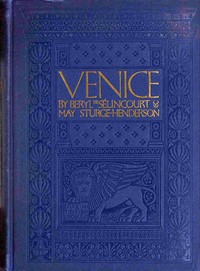
The source record for Venice — Story, Setting & Ideas measures this digital text at 66,589 words, 4 hr 50 min estimated reading time, and 16 detected text sections.
The text analysis averages about 31.3 words per sentence, while the detected sections provide another way to judge how the source is divided.
Project Gutenberg metadata also associates the work with “Venice (Italy) -- Description and travel,” connecting these edition facts with the source record’s subject description.
Explore this collection
These alternatives are selected using recorded categories and estimated reading time.
About 287 minutes
Geography
65,854 recorded words. 3 minutes difference from this book's estimate.
View Gutenberg source #71965About 282 minutes
Geography
64,745 recorded words. 8 minutes difference from this book's estimate.
View Gutenberg source #76702About 272 minutes
Geography
62,510 recorded words. 18 minutes difference from this book's estimate.
View Gutenberg source #58230Search stored excerpts and compare books → Choose by your preferences →
Choices use stored catalog measurements. Estimates vary with reading speed. A shared category is a catalog label, not a claim that two books have the same argument or literary quality.
Search reads excerpt text stored with this catalog and links to its associated Gutenberg record. The connection is stored in the site database; this tool does not recheck that every excerpt is word-for-word identical to that external record. Excerpt search does not cover every chapter and does not verify historical publication dates.
Catalog snapshot checked: 2026-09-25. Coverage: 97 public books, 97 available source excerpts.
Calculated from edition completeness, EPUB availability, text structure and catalogue metadata. Not a user rating.
Total of 100 points, scaled to a 2.5-5.0 range. Editions with an empty description or a missing EPUB file are not scored.
Public-domain source text
The source text is kept in the dedicated reader, separate from this catalogue record and its commentary.
The book opens with a bold claim: "Venice herself is poetry, and creates a poet out of the dullest clay." This sets the tone for a work that treats the city as a living, creative force rather than a static monument. The authors, Beryl De Sélincourt and May Sturge Henderson, weave together historical episodes, artistic commentary, and vivid descriptions of canals and architecture, often shifting abruptly from a grand procession to a quiet side canal. The structure is episodic, with chapters like "Phantoms of the Lagoons" and "Venice in Festival" that alternate between the spectral and the celebratory. Reginald Barratt's watercolor illustrations punctuate the text, grounding its more lyrical passages in specific views.
The authors frequently juxtapose the fluidity of the lagoons with the solidity of Venetian buildings. In the chapter "Venetian Waterways," they describe how "the pulse of the life which once she knew continues to throb behind the loud and insistent present," suggesting that the city's history is embedded in its physical fabric. The text moves from the Grand Canal's bustling traffic to the stillness of a side canal, where "a Venetian bridge" or "a palace door" becomes a focal point. This oscillation between motion and stasis mirrors the city's own character: a maritime republic built on wooden piles, forever suspended between land and sea.
The chapter "The Nuptials of Venice" and "Venice in Festival" examine how public ceremonies reinforced the Republic's power. The authors recount the reception of the condottiero Colleoni in 1455, noting how "barges over a thousand" and "three ships called bucintori" created a spectacle that blended military might with religious pageantry. They emphasize the calculated nature of these events: the Doge and Signoria, the display of sacred treasures at San Marco, and the careful wording of the investiture speech. The festivals are presented not as spontaneous joy but as deliberate demonstrations of state authority, with the city itself as the stage.
The section on Colleoni offers a nuanced portrait of a mercenary leader who "could act as a worthy representative of Venice" despite having once fought against her. The authors dwell on the paradox: Colleoni, a "paid alien," becomes "her virtual master, yet such a master as she was proud to serve." They speculate whether the sculptor Verrocchio, a Florentine, might have imagined "Venice the vassal, Venice subjected beneath the horse and his rider" when creating the equestrian statue. This reflection on loyalty, power, and artistic representation ties the individual to the city's broader identity as a pragmatic, adaptable republic.
Throughout the excerpts, light and shadow are used to evoke mood and history. The Campanile appears as a recurring motif, its shadow "falling across the Piazza" in multiple illustrations. The authors describe the "evening in the Piazzetta" and the "shadow of the Campanile" as almost tangible presences. In the chapter "The Soul that Endures," they suggest that Venice's beauty is inseparable from its decay: "she may fall, but she shall rise again." This interplay of illumination and obscurity reinforces the book's central tension between the city's glorious past and its present state.
Readers should approach this book as a series of interconnected essays rather than a systematic guide. The authors assume familiarity with Venetian history and art, but their vivid prose rewards those willing to follow digressions. Pay attention to the illustrations: Barratt's watercolors often capture the same scenes described in the text, creating a dialogue between word and image. The book is best read in short sessions, allowing each chapter's distinct atmosphere to settle before moving to the next.
That Venetian guide stayed with me like a quiet canal at dusk—the way it let centuries blur into one another. It reminded me of an older travel companion, A View of Society and Manners in Italy, Volume 1 (of 2) With Anecdotes Relating to some Eminent Characters — A Reader’s Guide, which lingers on voices rather than stone. Both feel less like reading and more like overhearing someone’s fond, unhurried memory of a place.
Answer a few questions and save a private reflection on this device.