About 23 minutes
London — A Reader’s Guide
Geography
5,074 recorded words. 22 minutes difference from this book's estimate.
View Gutenberg source #62048
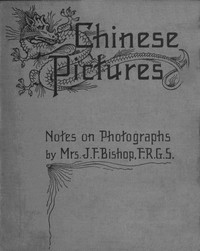
The source record for Chinese pictures — Context and Discussion measures this digital text at 10,225 words, 45 min estimated reading time, and 5 detected text sections.
The text analysis averages about 20.4 words per sentence, while the detected sections provide another way to judge how the source is divided.
Project Gutenberg metadata also associates the work with “China -- Description and travel,” connecting these edition facts with the source record’s subject description.
Explore this collection
These alternatives are selected using recorded categories and estimated reading time.
About 23 minutes
Geography
5,074 recorded words. 22 minutes difference from this book's estimate.
View Gutenberg source #62048About 71 minutes
Geography
16,329 recorded words. 26 minutes difference from this book's estimate.
View Gutenberg source #63136About 93 minutes
Geography
21,381 recorded words. 48 minutes difference from this book's estimate.
View Gutenberg source #68998Search stored excerpts and compare books → Choose by your preferences →
Choices use stored catalog measurements. Estimates vary with reading speed. A shared category is a catalog label, not a claim that two books have the same argument or literary quality.
Search reads excerpt text stored with this catalog and links to its associated Gutenberg record. The connection is stored in the site database; this tool does not recheck that every excerpt is word-for-word identical to that external record. Excerpt search does not cover every chapter and does not verify historical publication dates.
Catalog snapshot checked: 2026-09-25. Coverage: 97 public books, 97 available source excerpts.
Calculated from edition completeness, EPUB availability, text structure and catalogue metadata. Not a user rating.
Total of 100 points, scaled to a 2.5-5.0 range. Editions with an empty description or a missing EPUB file are not scored.
Public-domain source text
The source text is kept in the dedicated reader, separate from this catalogue record and its commentary.
Isabella Bird's Chinese Pictures (1900) pairs photographs with dictated notes that oscillate between precise observation and blunt cultural commentary. The book opens with an introduction framing the Chinese as 'a likeable people' despite Bird having been twice attacked, setting a tense tone. The notes themselves move from architectural description—such as the 'Colossal Astronomical Instruments on the Peking Wall'—to social reportage, as when Bird notes that in Hangchow 'the cry of "Foreign devil!" is never heard,' a rare exception. The prose is lean, often cataloguing details like gate functions or silk production, yet it occasionally shifts into broader reflection, as in the entry on a 'Forbidden City' gate where she speculates on the roots of anti-foreign hatred.
Bird repeatedly returns to city gates, treating them not merely as architectural features but as indicators of local sentiment. The Chien Mun Gate in Peking is described as 'the most interesting and picturesque feature of the country,' housing gongs that mark sunrise and sunset. Yet the same structure was 'blown up by the Japanese,' a rare nod to recent violence. Contrast this with the West Gate of Hangchow, where the people 'have had time to learn how much they profit by the trade the foreigner brings.' The gate becomes a measure of openness. Most striking is the 'Gate of a Forbidden City,' where Bird asserts that 'no foreigner has ever had the foolhardiness to enter' due to lethal hostility. Here her language tightens: she reports the belief that foreigners are 'child-eaters' who kill for eyes and hearts, drawing a parallel to European anti-Jewish suspicions. The gates thus serve as narrative thresholds, each entry modulating between neutral description and charged commentary.
In the section on Hangchow, Bird shifts focus to economic activity. She notes that 'everything speaks to the visitor of silk': mulberry trees cover the countryside, and 'thousands of hand-looms' operate. The accompanying photograph shows silk reeling, and Bird's text details the process without romanticizing it. She observes that Hangchow is 'a wealthy and generally well-to-do city,' linking its prosperity to the silk trade and to foreign commerce. This pragmatic tone contrasts with the earlier gate entries; here Bird is less concerned with danger than with industry. She mentions missionary hospitals 'to ameliorate the condition of the very poor,' but does not elaborate. The section is notable for its restraint: Bird reports what she sees—the looms, the mulberry trees, the population of 700,000—without moralizing. The pace slows, matching the repetitive, meticulous work of reeling silk.
The introduction and the 'Forbidden City' entry frame the book's underlying tension: Bird's sympathy for the Chinese people coexists with her experience of their violence. She writes that 'the problem of China is, and will for some time continue to be, the most interesting question to the rest of the world,' a geopolitical note that feels abrupt after the earlier gate descriptions. In the forbidden-city passage, she attempts to explain the 'hatred and detestation' by citing Western port-forcing and missionary activity, but admits these 'do not account for its ferocity.' The prose here becomes more analytical, even speculative, as she compares Chinese suspicions to European anti-Semitism. Yet Bird never resolves this tension; the notes remain fragmentary, each photograph a discrete encounter. The reader is left with a series of snapshots—literal and figurative—that resist easy synthesis. This structural choice mirrors the difficulty of understanding a culture through brief, often violent, contact.
Bird's notes are best read as a sequence of discrete impressions rather than a unified argument. The photographs anchor each entry, but the text often pulls in unexpected directions—from astronomical instruments to child-eating rumors. Pay attention to shifts in register: when Bird describes a gate, her language is architectural; when she discusses silk, it is economic; when she confronts hostility, it becomes ethnographic. These modulations reveal a writer trying to reconcile her own experiences with the demands of a popular audience. The book's brevity (about 10,000 words) rewards slow reading, each entry a small puzzle of observation and inference.
That grey afternoon, the rain kept time against the shutters as I traced Isabella Bird’s 1900 Peking notes, her careful eye on silk-reeling and closed gates. Her quiet patience with a hostile time stayed with me, unhurried. Later, leafing through loose shelves, I stumbled upon Itinerarium curiosum (centuria I) — A Closer Reading, whose odd titles felt like a friend’s hand at my elbow, and the hours slid by unnoticed.
Answer a few questions and save a private reflection on this device.