About 45 minutes
Chinese pictures — Context and Discussion
Geography
10,225 recorded words. 22 minutes difference from this book's estimate.
View Gutenberg source #71968
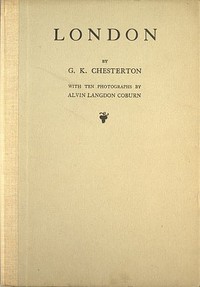
This digital edition of London — A Reader’s Guide is described by source-level measurements including 5,074 words, 23 min estimated reading time, and 1 detected text section.
The text analysis averages about 23.2 words per sentence, while the detected sections provide another way to judge how the source is divided.
Project Gutenberg metadata also associates the work with “London (England) -- Description and travel,” connecting these edition facts with the source record’s subject description.
Explore this collection
These alternatives are selected using recorded categories and estimated reading time.
About 45 minutes
Geography
10,225 recorded words. 22 minutes difference from this book's estimate.
View Gutenberg source #71968About 71 minutes
Geography
16,329 recorded words. 48 minutes difference from this book's estimate.
View Gutenberg source #63136About 93 minutes
Geography
21,381 recorded words. 70 minutes difference from this book's estimate.
View Gutenberg source #68998Search stored excerpts and compare books → Choose by your preferences →
Choices use stored catalog measurements. Estimates vary with reading speed. A shared category is a catalog label, not a claim that two books have the same argument or literary quality.
Search reads excerpt text stored with this catalog and links to its associated Gutenberg record. The connection is stored in the site database; this tool does not recheck that every excerpt is word-for-word identical to that external record. Excerpt search does not cover every chapter and does not verify historical publication dates.
Catalog snapshot checked: 2026-09-25. Coverage: 97 public books, 97 available source excerpts.
Calculated from edition completeness, EPUB availability, text structure and catalogue metadata. Not a user rating.
Total of 100 points, scaled to a 2.5-5.0 range. Editions with an empty description or a missing EPUB file are not scored.
Public-domain source text
The source text is kept in the dedicated reader, separate from this catalogue record and its commentary.
Chesterton opens with a leisurely anecdote about a countrywoman circling the Underground, a story he calls 'beautiful' and 'a song without words.' This sets the tone for a meditation that moves between the literal and the symbolic, the mundane and the mythic. His voice is that of a flâneur, digressing from the tale into a reflection on how London's station names—Blackfriars, Temple, Charing Cross—carry more dignity than the streets they label. The prose is conversational, with a wry, affectionate humor that never becomes cynical.
Chesterton uses the Underground story not merely as an opener but as a structural device. The anecdote of the lost traveler becomes a lens for viewing London as a place of misdirection and hidden meaning. He contrasts the 'stout old lady' with the 'aged farmer and his daughter,' each failing to alight for different reasons. The lady is a victim of courtesy; the farmer, of imagination. This doubling suggests that Chesterton is less interested in a single truth than in the multiple ways London can be misread. The anecdote's circularity—the train going 'round and round'—mirrors the essay's own looping logic, returning to the idea that names are 'nobler than the things.'
Chesterton lingers on the etymology and history of place names, treating them as poetic fragments. 'Blackfriars' evokes the 'Dogs of God,' a reference to the Dominican order. 'The Temple' is 'more essential and eternal' than the lawyers or vagabonds who occupy it. 'Charing Cross' recalls a queen's memorial, now lost amid porters and trippers. This catalog is not exhaustive but suggestive: each name is a portal to a lost context. Chesterton's method is associative, not systematic. He does not argue for preservation but for a kind of imaginative archaeology, where the reader is invited to see the city as a palimpsest of meanings that the modern station obscures.
The essay's rhythm is unhurried, with long sentences that loop back on themselves. Chesterton frequently interrupts his own train of thought with parentheses or asides—'perhaps we might dare to say a more probable version'—creating a sense of spoken intimacy. The pace mimics the Underground journey: stops and starts, moments of focus on a single station, then a lurch forward to the next. This digressive style is not a flaw but a deliberate strategy. It allows Chesterton to hold multiple perspectives in suspension, refusing a single authoritative reading of London. The reader is left to wander, like the farmer, through a city of signs that promise more than they deliver.
Chesterton's London is a city best approached through its names, not its streets. The essay rewards a slow, attentive reading that savors its detours. Pay attention to how Chesterton shifts from the comic to the contemplative; his transitions often carry the real argument. The incomplete excerpt leaves the journey unfinished, but the method is clear: to see London as a text, where every station name is a footnote to a larger story.
Reading about Chesterton ambling past street names that once meant something, I remembered waiting for a bus near an old coaching inn, feeling the ghosts of other journeys under the pavement. English Hours — Story, Setting & Ideas gave me that same quiet ache, where a place holds more layers than the eye admits, and time itself seems to breathe.
Create a short personal record of your experience with this book.