About 226 minutes
A Florida Sketch-Book — A Reader’s Guide
Geography
51,944 recorded words. 1 minutes difference from this book's estimate.
View Gutenberg source #59608
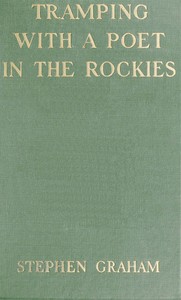
For Tramping With a Poet in the Rockies — Reading Companion, the stored edition analysis reports 52,119 words, 3 hr 47 min estimated reading time, and 44 detected text sections.
The text analysis averages about 18.1 words per sentence, while the detected sections provide another way to judge how the source is divided.
Project Gutenberg metadata also associates the work with “West (U.S.) -- Description and travel,” connecting these edition facts with the source record’s subject description.
Explore this collection
These alternatives are selected using recorded categories and estimated reading time.
About 226 minutes
Geography
51,944 recorded words. 1 minutes difference from this book's estimate.
View Gutenberg source #59608About 216 minutes
Geography
49,678 recorded words. 11 minutes difference from this book's estimate.
View Gutenberg source #62610About 214 minutes
Geography
49,192 recorded words. 13 minutes difference from this book's estimate.
View Gutenberg source #67784Search stored excerpts and compare books → Choose by your preferences →
Choices use stored catalog measurements. Estimates vary with reading speed. A shared category is a catalog label, not a claim that two books have the same argument or literary quality.
Search reads excerpt text stored with this catalog and links to its associated Gutenberg record. The connection is stored in the site database; this tool does not recheck that every excerpt is word-for-word identical to that external record. Excerpt search does not cover every chapter and does not verify historical publication dates.
Catalog snapshot checked: 2026-09-25. Coverage: 97 public books, 97 available source excerpts.
Calculated from edition completeness, EPUB availability, text structure and catalogue metadata. Not a user rating.
Total of 100 points, scaled to a 2.5-5.0 range. Editions with an empty description or a missing EPUB file are not scored.
Public-domain source text
The source text is kept in the dedicated reader, separate from this catalogue record and its commentary.
Stephen Graham’s account of tramping through the Rockies with Vachel Lindsay is built on a striking contrast: the poet’s two voices. One is “harsh and strident,” the voice of a “hell-roarer” and political agitator; the other is “sonorous and golden,” the voice of a Homeric harper. Graham observes how these voices trade dominance depending on the day and the landscape. When the mountains close in, the political noise fades, and Lindsay croons poems by heart, his face bird-like, his eyes nearly shut. The narrative itself shifts pace accordingly—from rapid-fire political banter to slow, chanting reverence.
Graham explicitly identifies two registers in Lindsay’s speech. The first is the “politician” voice: strident, argumentative, given to toasts and orations. In one excerpt, Lindsay launches into a misquoted Patrick Henry speech, and Graham deliberately repeats the line “I—do—not—care—for—others” to needle him back into laughter. The second voice emerges when the pair “washed off our politics from our minds at high noon in a river.” Then Lindsay chants Kipling’s “Buddha at Kamàkura” repeatedly, “like a prayer.” Graham notes that the printed poem is only a clue; the real poem is in the performance. This duality is not merely described but enacted in the text’s own rhythm, swinging between conversational sparring and lyrical quotation.
The book’s pace is tied to the terrain. Graham writes that “some days with us were naturally dedicated to poetry,” when “the steps on the mountains caught the rhythms” and “the gliding waterfalls and the intensely coloured listening flowers suggested the mood of the poets.” On such days, “the hymns were silenced,” and “Silence hung on the mute figures of Bryan and Altgelt.” The political references—Bryan, Altgelt, Roosevelt—are literally put to rest. The prose slows, becomes more incantatory, mirroring Lindsay’s chanting. Elsewhere, the narrative accelerates into comic dispute, as when Lindsay refuses to toast “the enemies of King George” but will toast “the enemies of the English people,” leading to a deadpan stalemate. These shifts in tempo are the book’s structural principle.
Graham insists that Lindsay’s poems are “written to be read aloud, chanted, or declaimed,” and that the audience often joins in choruses. The excerpts bear this out: Lindsay’s “unending chant” of Patrick Henry and his crooned repetitions of “Buddha at Kamàkura” are performances that the text can only approximate. Graham’s own prose tries to capture the oral quality—he transcribes the chant’s rhythm, notes the “sonorous, heaven-reaching voice,” and describes Lindsay’s physical transformation when reciting: “his eyes almost close, his lips purse up and open like a thrush’s beak.” The editorial note here is that the book itself is a hybrid: part travelogue, part transcript of a living performance. Readers should imagine the sound, not just the sense.
Because the excerpts are limited, the full arc of the tramp—its route, duration, and the balance of political versus poetic days—remains unclear. What is evident is that Graham’s narrative is less a geographical record than a study in vocal and rhythmic contrast. Readers attentive to shifts in sentence length, to the alternation of quoted argument and quoted verse, will find the book’s design most apparent. Treat each episode as a performance in miniature, with the Rockies as a changing backdrop that cues the poet’s voice.
There were moments in Tramping With a Poet in the Rockies when Lindsay’s cadence felt less like speech and more like weather—gathering, breaking, then fading into pine-scented quiet. That same wandering spirit, the ache of moving through open country with only a song for company, lingered with me afterward. It surfaced again, unexpectedly, while leafing through Westward hoboes — Edition Insights, as if the trail had simply continued on another page. Some journeys never quite end.
Build a private reading journal entry for this title.