About 122 minutes
Grand moving diorama of Hindostan — A Reader’s Guide
Geography
28,000 recorded words. 0 minutes difference from this book's estimate.
View Gutenberg source #60006
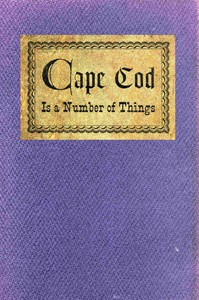
This digital edition of Cape Cod is a number of things — Themes and Context is described by source-level measurements including 28,053 words, 2 hr 2 min estimated reading time, and 26 detected text sections.
The text analysis averages about 27.0 words per sentence, while the detected sections provide another way to judge how the source is divided.
Project Gutenberg metadata also associates the work with “Cape Cod (Mass.) -- Description and travel,” connecting these edition facts with the source record’s subject description.
Explore this collection
These alternatives are selected using recorded categories and estimated reading time.
About 122 minutes
Geography
28,000 recorded words. 0 minutes difference from this book's estimate.
View Gutenberg source #60006About 125 minutes
Geography
28,728 recorded words. 3 minutes difference from this book's estimate.
View Gutenberg source #73368About 116 minutes
Geography
26,630 recorded words. 6 minutes difference from this book's estimate.
View Gutenberg source #57437Search stored excerpts and compare books → Choose by your preferences →
Choices use stored catalog measurements. Estimates vary with reading speed. A shared category is a catalog label, not a claim that two books have the same argument or literary quality.
Search reads excerpt text stored with this catalog and links to its associated Gutenberg record. The connection is stored in the site database; this tool does not recheck that every excerpt is word-for-word identical to that external record. Excerpt search does not cover every chapter and does not verify historical publication dates.
Catalog snapshot checked: 2026-09-25. Coverage: 97 public books, 97 available source excerpts.
Calculated from edition completeness, EPUB availability, text structure and catalogue metadata. Not a user rating.
Total of 100 points, scaled to a 2.5-5.0 range. Editions with an empty description or a missing EPUB file are not scored.
Public-domain source text
The source text is kept in the dedicated reader, separate from this catalogue record and its commentary.
The book opens with a September drive, the narrator pointing out sights until a companion remarks, "When you talk about the Cape it is as if you owned it." This exchange sets the tone for a series of columns that are unapologetically possessive and affectionate. The narrator admits the truth of the accusation, then attempts to explain what the Cape means to him: "Cape Cod is a number of things, and it means a number of things to me." The chapters that follow—drawn from the author's column Soundside in the Yarmouth Register—range from sunrise observations to profiles of fishermen, captains, and local eccentrics.
The opening chapter, "At the Rising of the Sun," describes a "strange half-light between yesterday and today" as cars converge on a hill after a gale. The prose is sensory: headlights form "diadems of light" on rain-washed streets, and cars swerve to avoid branches tossed by wind. This attention to weather and light recurs throughout. The narrator insists that the Cape offers "a thousand colors and a thousand variations of each; there are a thousand moods and you never know which one to expect." The land and sea are presented not as static backdrops but as active presences that demand attention. The columns avoid sweeping historical claims; instead, they ground observations in specific moments—a September afternoon, a February night, a spring morning.
Several chapters focus on Cape Cod's independent purveyors of nostrums. One anecdote recounts a parson who inadvertently advertised a local panacea by praying for "speedy relief" for the sick. A jingle for "Speedy Relief" is quoted: "Speedy Relief is my belief / And so it is of many. / Put up in bottles / With little cork stopples / And sold by William F. Kenney." Another figure, Aunt Sophie, brewed bitters and was sought for fortunes; she was "the seventh daughter of a seventh daughter" and held conversations with her hens. The narrator notes that young men going to sea and lovesick girls would visit her. These sketches are affectionate but not sentimental, and they treat the characters as part of the Cape's texture rather than as quaint relics.
The chapter "Some Purveyors of Nostrums" culminates in a portrait of the village pharmacy as "the heart of every Cape village." In winter, it is the only lit, warm place on Main Street; in summer, it is full of children eating ice cream and adults choosing postcards. The pharmacist is described as "doctor, librarian, caterer, banker, after-hours post master, good listener, psychiatrist, moderator and custodian of the local Forum." The pharmacy serves as a place to hear news and opinions, and the narrator notes that candidates who fail to visit all pharmacies do so at their peril. The description is specific and grounded: the shelves still hold old-fashioned remedies alongside new wonder drugs, and the pharmacist must decipher doctors' scrawls.
These columns were written for a local newspaper audience familiar with the places and people mentioned. The book does not attempt a comprehensive history or guide; instead, it offers a series of vignettes that capture the Cape's character through its weather, its small businesses, and its memorable residents. Readers interested in mid-century local color or the craft of the newspaper column will find a consistent voice and a clear affection for the subject.
That book about Cape Cod stayed with me the way certain places do—not for its grand gestures, but for how quietly it noticed the tide’s pull and the people shaped by it. I found a similar patience in The cave dwellers of Southern Tunisia — A Closer Reading, where the land itself seems to speak in the same unhurried, weathered tones. It left that same gentle ache of having witnessed something real.
Your answers remain private and are stored only in this browser.