About 310 minutes
The Holyhead Road: The Mail-coach Road to Dublin. Vol. 2 — A Reader’s Guide
Geography
71,082 recorded words. 2 minutes difference from this book's estimate.
View Gutenberg source #58841
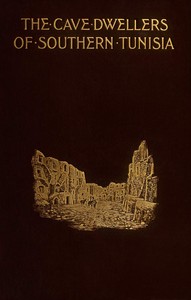
The catalog record for The cave dwellers of Southern Tunisia — A Closer Reading provides practical reading context through 70,769 words, 5 hr 8 min estimated reading time, and 9 detected text sections.
The text analysis averages about 22.2 words per sentence, while the detected sections provide another way to judge how the source is divided.
Project Gutenberg metadata also associates the work with “Tunisia -- Description and travel,” connecting these edition facts with the source record’s subject description.
Explore this collection
These alternatives are selected using recorded categories and estimated reading time.
About 310 minutes
Geography
71,082 recorded words. 2 minutes difference from this book's estimate.
View Gutenberg source #58841About 290 minutes
Geography
66,589 recorded words. 18 minutes difference from this book's estimate.
View Gutenberg source #66295About 287 minutes
Geography
65,854 recorded words. 21 minutes difference from this book's estimate.
View Gutenberg source #71965Search stored excerpts and compare books → Choose by your preferences →
Choices use stored catalog measurements. Estimates vary with reading speed. A shared category is a catalog label, not a claim that two books have the same argument or literary quality.
Search reads excerpt text stored with this catalog and links to its associated Gutenberg record. The connection is stored in the site database; this tool does not recheck that every excerpt is word-for-word identical to that external record. Excerpt search does not cover every chapter and does not verify historical publication dates.
Catalog snapshot checked: 2026-09-25. Coverage: 97 public books, 97 available source excerpts.
Calculated from edition completeness, EPUB availability, text structure and catalogue metadata. Not a user rating.
Total of 100 points, scaled to a 2.5-5.0 range. Editions with an empty description or a missing EPUB file are not scored.
Public-domain source text
The source text is kept in the dedicated reader, separate from this catalogue record and its commentary.
Daniel Bruun's The Cave Dwellers of Southern Tunisia opens not with a sweeping landscape but with a bureaucratic note: the author thanks officials who smoothed his path—the Danish consul, French officers, and the British representative Drummond Hay. This framing immediately establishes the work as both a personal travelogue and a commissioned ethnographic mission, undertaken for the National Museum in Copenhagen. The text itself is a hybrid, combining letters written home, articles intended for French journals, and later reflections. The result is a narrative that shifts between the measured tone of a scientific report and the immediacy of a diary, with the latter often capturing scenes of striking intimacy.
Bruun's narrative voice is not uniform. In the preface, he adopts the formal register of a scholar, detailing the chain of permissions and introductions that enabled his journey. Yet when describing the wedding ceremony, the prose becomes immediate and sensory: “the music shrieking hideously over the hill,” “the obstinate beast refused.” The translator, L. A. E. B., preserves these shifts, allowing the reader to feel the author's presence—sometimes a detached ethnographer, sometimes a curious guest who nods to girls and receives titters in return. This duality is most apparent in the wedding scene, where Bruun observes the circumcision ritual with clinical precision while also noting the bride's vulnerability: “Poor little Mena: you were to be worried yet a little longer.” The direct address to the bride breaks the fourth wall, momentarily collapsing the distance between observer and subject.
The narrative pace varies markedly between sections. The preface moves quickly through a list of acknowledgments, compressing weeks of travel into a few paragraphs. In contrast, the wedding episode unfolds in near real-time, with Bruun describing the arrival of musicians, the palanquin, the camel's refusal to kneel, and the children's circumcision in meticulous sequence. This slowing of pace mirrors the author's own absorption in the event; he notes details like “the negress stretched her black arm beneath the canopy to pass in a finger-ring” and the children's attire—“red caps with tassels richly adorned with gold and silver ornaments.” The effect is immersive, drawing the reader into the sensory overload of the scene. Elsewhere, the text resumes a brisk, reportorial tempo, summarizing days of travel in a sentence. These shifts in rhythm are not arbitrary; they signal moments of heightened ethnographic significance or personal engagement.
Two recurring elements anchor the narrative in its specific time and place. The first is Belkassim, a figure who appears repeatedly as a gatekeeper and enforcer of order: “Belkassim, the ubiquitous Belkassim, keeping back the boys with his marshal’s stick.” His presence provides continuity across disparate scenes, and Bruun's wry epithet suggests a fondness for this local character. The second is the “detective camera” Bruun mentions in the preface, with which he took “instantaneous photographs” on the journey. This detail underscores the work's documentary intent and its reliance on emerging technology. The camera becomes a silent companion, shaping what Bruun chooses to record—and how. Together, these motifs hint at the negotiation between the foreign observer and the local community, a dynamic that permeates the entire book.
Readers should approach The Cave Dwellers of Southern Tunisia as a layered document: part travel diary, part ethnographic report, part personal correspondence. The shifts in tone and pace are not flaws but deliberate choices that reveal the author's evolving relationship with his subject. Pay attention to the moments when Bruun steps back from scientific detachment and allows himself to be moved—or puzzled—by what he witnesses. These are the passages where the book transcends its era and speaks directly to the challenges of cross-cultural observation.
That rainy afternoon, Bruun’s account of the wedding in the cave settlement stayed with me—the way formal observation melted into the dust and laughter of the moment. It put me in mind of other journeys where the route matters less than the pause. I found myself thinking of coaching roads, and later picked up The Hastings Road and the "Happy Springs of Tunbridge" — Themes and Context, which has its own quiet way of lingering.
Build a private reading journal entry for this title.