About 503 minutes
Seven years in South Africa, volume 1 (of 2) — Key Ideas to Explore
Geography
115,584 recorded words. 8 minutes difference from this book's estimate.
View Gutenberg source #74281
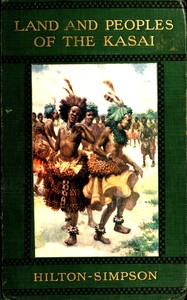
The source record for Land and peoples of the Kasai — A Reader’s Guide measures this digital text at 113,767 words, 8 hr 15 min estimated reading time, and 24 detected text sections.
The text analysis averages about 36.2 words per sentence, while the detected sections provide another way to judge how the source is divided.
Project Gutenberg metadata also associates the work with “Congo (Democratic Republic) -- Description and travel,” connecting these edition facts with the source record’s subject description.
Explore this collection
These alternatives are selected using recorded categories and estimated reading time.
About 503 minutes
Geography
115,584 recorded words. 8 minutes difference from this book's estimate.
View Gutenberg source #74281About 484 minutes
Geography
111,202 recorded words. 11 minutes difference from this book's estimate.
View Gutenberg source #72267About 482 minutes
Geography
110,768 recorded words. 13 minutes difference from this book's estimate.
View Gutenberg source #69270Search stored excerpts and compare books → Choose by your preferences →
Choices use stored catalog measurements. Estimates vary with reading speed. A shared category is a catalog label, not a claim that two books have the same argument or literary quality.
Search reads excerpt text stored with this catalog and links to its associated Gutenberg record. The connection is stored in the site database; this tool does not recheck that every excerpt is word-for-word identical to that external record. Excerpt search does not cover every chapter and does not verify historical publication dates.
Catalog snapshot checked: 2026-09-25. Coverage: 97 public books, 97 available source excerpts.
Calculated from edition completeness, EPUB availability, text structure and catalogue metadata. Not a user rating.
Total of 100 points, scaled to a 2.5-5.0 range. Editions with an empty description or a missing EPUB file are not scored.
Public-domain source text
The source text is kept in the dedicated reader, separate from this catalogue record and its commentary.
In the summer of 1907, M. W. Hilton-Simpson abandoned a Sahara expedition and instead joined Emil Torday on an ethnographic survey of the Kasai and Sankuru basins. The resulting narrative, Land and Peoples of the Kasai, is a detailed account of two years among communities the author terms “cannibals of the equatorial forest” and “other savage tribes.” The book’s value lies not in its dated terminology but in its precise, often startled observations of daily life—from the Akela’s complete removal of incisor teeth to the Batetela’s contrasting treatment of the dead. Hilton-Simpson’s voice is that of a curious, sometimes bemused outsider, recording what he sees without imposing a grand theory.
The Akela, Hilton-Simpson reports, knock out all their incisor teeth in both jaws upon reaching marriageable age. The reason, he writes, “appears to be merely the fact that it is fashionable.” The absence of front teeth causes the lips to recede, giving many Akela “quite a European type of countenance.” The removal method is brutal: a blacksmith places an iron wedge against the tooth and strikes it with a block of wood, breaking it off at the gum. This practice has a direct consequence for eating: unable to bite off meat held in the hand, the Akela hold their knives point-upward between their toes and cut off mouthfuls by drawing the meat along the edge. The observation is typical of the author’s eye for how a single custom ripples through everyday life.
Among the Akela, clothing is minimal. Women wear “no other garment than a very minute piece of cloth between their legs, supported by strings around their waists.” The author notes that such garments are “extremely rare”; in several villages, the expedition could find only one woman who possessed a second dress. Men wear slightly larger pieces of cloth and often don caps made of monkey skin to protect their carefully styled hair from tree branches. Hilton-Simpson declines to judge the women’s beauty, remarking that if they are admired, it is “for their own charm, and not for any beauty which their costumes can lend them.” The passage reveals both the author’s ethnographic impulse and his self-aware limitations.
In contrast to the Akela’s minimal dress, the Batetela of the forest build elaborate houses over tombs—well-built, neat structures that command respect. Hilton-Simpson observes that “respect for the graves of the departed is more noticeable among the peoples of the forest than among any of the other natives we visited.” When a chief or important member dies, the entire village may relocate, leaving the old settlement deserted. This practice sets the forest Batetela apart from their “more advanced cousins of Mokunji,” who were willing to sell skulls of their dead. The author notes that no skulls were collected in the forest; to have suggested it “would have grievously offended” the inhabitants. The contrast underscores the diversity of custom even within related groups.
Readers should approach this 1911 narrative as a period document, not a modern ethnography. Hilton-Simpson’s frankness about his own perplexities—his inability to judge African beauty, his surprise at Akela eating methods—makes the account more honest than many later works. Pay attention to the small details: the iron wedge, the monkey-skin cap, the deserted village. They are the book’s real substance.
That old Kasai guide never leaves my hands without a pang—those vanished customs, noted so gently, ask for witnesses. El Toro — Edition Insights holds a different quiet kinship, a dignity in its own careful looking. Over decades, I have learned both books keep faith with what passes, asking nothing but that we remember. El Toro — Edition Insights sits beside it on my shelf, two patient companions.
Save your reaction, strongest insight, and memorable passage.